|
Moira Barrett
www.moirabarrett.com
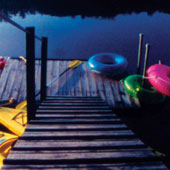
"Surface Tension” examines water--its fluidity, its interaction with light and darkness, its mystery, and how the human body reacts to that stimulus.
Ellie Brenner
ebrenner1803@netzero.com
A fascination with decomposition has become a major focus in my work. Using water as a catalyst, I have developed a weathering process to achieve surface aging. I am drawn to the colors, textures and the element of surprise inherent in creating art that evolves through disintegration.
Creating art is a mystery, especially to me. Always relying on intuition and my inner dialogue, exploration and discovery provide a framework for expressing a personal language.
Matt Carrano
www.mattcarrano.com
mattcarrano@verizon.net
I was inspired to create the painting, The Bridge, in 2000 during the construction of the Zakim Bridge. I have always been fascinated by the geophysical history of Boston as the story of man’s quest to live in relationship to the sea. At the time Boston was settled in the 1600’s it was only a peninsula surrounded on three sides by water and connected to the mainland only by a small neck of land. The nearly 400 years since then have been witness to numerous projects intended to bridge, tunnel, and otherwise reclaim land from the sea. Our fascination with the sea has been reflected in much of our literature and art, from Melville’s Moby Dick to the epic paintings of Winslow Homer. Often the sea is presented as a force to be reckoned with, an obstacle to be crossed, and an object of both beauty and awe. More recently we have become aware that our future as a race is dependent on our ability to live in harmony with the waters that surround us an that our oceans are a source of life..
Heather Classen
www.heatherclassen.com
"Moving water is often peaceful, calming, even mesmerizing.
I have found that capturing an instant of light glistening off
the water's surface unmasks a whole other perspective.
Otherwise unnoticed ripples are highlighted by the sun and other reflected light,
unveiling the subtlest of movements, suggesting even doodles drawn with a pen.
The breadth of the shot doesn't need to be very wide, the smallest bit
of trickling water will reveal delicate currents and wisps of mist unseen to the naked eye."
Stan Czesniuk
www.stanc-images.com
I often incorporate water as a major element of the images I shoot. Sometimes it is the subject with other elements just being an enhancement. This particular image is a true reflection on the beach. When the tide recedes leaving the "flats" behind, what is left is saturated sand with a skim coat of water on top yielding a mirror effect. The reflection of sunlight onthe grains of sand reveals otherwise unnoticed colors. The figures become more abstract--depersonalizing them as it were.
Christine Destrempes
www.destrempes.com
cdestrempes@verizon.net
My work explores the personality of water.
I am drawn to water’s capacity for transformation as well as its reflective stillness,
seamless adaptability, and proclivity to follow the path of least resistance.
Water is the perfect embodiment of permanence and impermanence.
By observing it, there is much to learn about navigating life.
My monotypes are done on steel plates using mixed etching inks,
then rolled by hand through an etching press. Some of the images are built with
several – could be as many as 20 – different impressions transferred to one sheet of paper.
Each is a unique print. Mostly I use imported, hand made paper. Glass separates the richness
of the paper and ink color from the viewer, so after experimenting, I discovered that applying
beeswax to the prints enhanced their color, protected the work, and made them virtually
indestructible. I turned to printing on silk because I wanted to work larger than the size my press
bed would allow. I use water-based dyes and paints, so the pressure required to transfer an
image can be accomplished by hand on a table top.
Through my exploration and interpretation of water’s myriad characteristics and
sublime beauty, I hope not only to engender an appreciation for, but also
to promote preservation of one of our most precious natural resources.
Angela Devenney
angeladevenney.blogspot.com
angela_devenney@yahoo.com
During the fall, in the rural, west-coast of Ireland, frequent, intense rains pour from the sky. The
heavy rain causes water tables to rise, unpredictably at times. Water streams from the atmosphere
and up through openings in earth, called swallow holes. This creates a phenomenon known as
turloughs (ter-locks). Essentially, turloughs are lakes that spring up overnight in the precipitous fall
and winter seasons, and may last only a day, or for the duration of the season, depending on
rainfall.
The inspiration for this body of work came from a moment when I discovered my front yard, where
the farmer’s cows grazed all day, had suddenly become waterfront property- Clover and wild
grasses that stood just a day earlier, became like seaweed. I was not only astonished by the
complete flux of environment- from farmland to wildlife water habitat- but also at the immense
volume of rain that was falling. I began to gather precipitation that fell each day. I brought it into
the darkroom, and created photograms of the water, hoping to capture the power and mystery of this
unique, instant lake situation. The images were then scanned and enlarged, further magnifying the
beauty and force of rain, and the bodies of water it was creating.
Gary Duehr
www.garyduehr.com
gary@garyduehr.com
liminalities
In these extended-frame color photographs, I'm trying to capture the liminal moments between things. There's a feeling that narrative is suspended, that something has just happened or is about to. A door is partway open, the back of a head is glimpsed in a hallway, two figures in a car are seen in deep discussion, on their way to places unknown.
Gleaned in movie theaters from trailers of coming attractions, using a slow shutter speed, the photographs at times literally depict the moment between&emdash;as frames shift from one image to another. In these overlaps, ghostly trails appear. Faces superimpose on landscapes. Streaks of light and patches of shadow interrupt a possible story.
Seen another way, "Liminalities" captures the detritus of cultural overflow. These found images suggest our preoccupations. A short list might include cars, beds, and big windows, occupied by concerned looking couples or loners. It's as if every movie, and perhaps American consciousness, has at its core a roadside motel.
Ruth Hamill
www.hamillpaintings.com
ruth@hamillpaintings.com
For me, the reflection of sky on water is the most compelling and beautiful sight. But the sea/sky horizon is transient. That’s why I try to capture and present my interpretation of this wonderful, ever-changing view of the water. I paint the sea’s horizon in oils, both traditionally and through a non-traditional technique I developed that relies on a diluted mixture of oil paint poured and layered on unprimed linen to create the dynamic and light-filled effect of the sea’s horizon at sunset and sunrise. I want viewers to have a similar feeling looking at these paintings as they do on the water or at the water's edge: breathe deep, soak it in.
Liz Johnson
http://faculty.colostate-pueblo.edu/liz.johnson/portfolio/
lizj@bresnan.net
The Silence of Water
The photographs in this exhibit are the result of my contemplative study of water and its forms over the last several years. My compositions are abstract yet I view these images as a kind of portraiture; they are a record of my interaction with the waters’ energies. I create these images using the method of contemplative photography; through this process the mind is silenced and the subject is allowed to reveal itself.
I photograph water throughout the seasons in its myriad forms; in winter I discover the crystalline and sculptural compositions of ice, in autumn the water’s dance with falling leaves, in spring the forceful flow of the rushing water’s thaw and in summer the refreshing and cooling spray on rock. As I look at the diversity in my images of water, it seems that I could explore this subject endlessly and never exhaust its countless possibilities.
Shelley Loheed
www.shelleyloheed.com
"Understanding the fact that we are essentially water is the key to
uncovering the mysteries of the universe..."
--Masaru Emoto
I'm intrigued by the knowledge that water forms crystals in response to
sound. Through the work of Japanese scientist Masaru Emoto, meditation and
Vedic writings I have come to the understanding that the universe is
composed by sound. Sound moves through water creating patterns and becomes
the vehicle for form to manifest. My paintings are investigating this
notion. The base of paintings and drawings is a grid that forms the network
to create complex patterns. The drawing is improvised from there with
images that evoke powerful forces, such as water. Grid and pattern mix with
the flow and currents of the spatters and washes, creating a freeze-frame of
universal flux and stasis between the sharp lines and expressive fields.
Denyse Murphy
For me, there is nothing as fascinating as water except perhaps the dazzling combination of water and light. But it is not the ever changing reflective surface that comes to mind when I think of water, it is the experience of it's depth. I feel that water is the elemental vehicle of emotion, and is representative of body consciousness. Our physical being was formed in water. Maybe underwater experience, complete immersion creates an echo or memory with what may be our first experience as physical beings, weightless abeyance.
Greg O'Brien
http://members.aol.com/obriengreg/
obriengreg@aol.com
I have a favorite spot on Lake Winnipesaukee where I photograph water reflected images that express in me a feeling of the place where I spent the summers of my youth. For the past 7 years I have been working on abstractions of water reflections on the lake. In my earlier photographs I shot the fall foliage, when the light and color was just right for reflections. Later, I expanded my subject matter to include boats, buoys and other objects continuing to create an image unrecognizable from the original reflected object. Water has a natural quality that changes in form from “wavy and to smooth, delicate and fluffy, to detailed and abstract. They’re fun to look at just to ponder what shapes you can see in it.” (Cole O’Brien, age 13) My photographs can range from ghostly shaped portraits, to abstract landscapes reminiscent of color field painting. What a person sees can change from person to person coming from one’s own visual memories and experiences..
Dan Osterman
http://danosterman.com
dan_illustration@yahoo.com
Monhegan
Every year go down to the sea,
down to the sea to Monhegan, drawn like me
to the conflict of sea meeting headland,
the highest headlands on the eastern seaboard, where Bartolomew Gosnold
in 1605 first met the mysterious natives fishing in their shallops,
who “spake well” with him in English.
Go to drink inspiration among the ghosts
of an elderly American painterly imagination
that turned to the beauty that had been sundered
and said, “Forgive me,” and tenderly devoted themselves
to saving what they could see.
Some to come here to the New England Polynesia,
where you could go native in slickers and there be no consequence.
As in physics they discovered it is possible to make visual elemental awareness,
which of course is what they passed onto Pollack and them.
Salt makes everything new again.
The island is shaped like a whale being blown inland.
The sea storms all winter long,
throwing back the trees edging ever closer in their dumb way
to the cracking the cliffs of forever.
Roughing it up the paths too many tourists have trod into the ground,
deepening the troughs till they flood down,
they come for the birds who come earlier every year,
on their stopover from Brazil, less and less every spring.
“Tut, tut,” is it the end of the world? So it goes at the dinner table.
Come for the salt and the spray and the gurgle and grind of silence,
the sea-water, being like blood, coming every third wave luckily,
luckily, on its way to either high or low-tide.
Kathleen Rugh
kathyrugh@gmail.com
My 16mm film, I remember that they existed, but not what they were, depicts water through the weather patterns of summer rainstorms. There is a cyclical pattern from the build up of swelling clouds, to the rushing release of pouring rain, to more soothing droplets, to finally the calm after the storm before this pattern begins again. The transitory nature of the rain is something that I relate to the transitions that exist in my own life. Meanwhile, there is a meditative quality to observing the simple nature of water and light as it exists in a swollen river in New Hampshire. Together these attributes of water offer a contemplative and inspiring state of mind.
Cathy Schaefer
www.cathyschaefer.com
cathy.schaefer@comcast.net
Often depicted as a gift from above, water gives Earth
the capacity to support life. It nourishes us, entertains
us, and bathes us. It can also be a powerful destructive
force. Yet humans often take water for granted. We let
it run out of the faucet, dump our trash in it, and
forget what a miracle it truly is.
My recent paintings dwell on the patterning—
the fluid dynamics—revealed on water surfaces.
The compostions are void of the contextual
relationships that define space. Instead, the viewer
is pulled in for a close-up look without the
juxtapositions of surrounding environment. Complete
focus reveals more detail, shape and color—the
subject’s real character.
My work is about the act of looking, with each painting
being a moment's obsession on a particular visual
event. It is a search for peace in our chaotic world by
being in the moment, appreciating the here and now,
and recognizing the striking beauty that
extemporaneously occurs in nature.
Jane Sherrill
www.janesherrill.com
jane@janesherrill.com
This painting is part of my Split the Sea series—my meditation on the Exodus story. It is dedicated to my friend Joan who succumbed in her struggle with cancer two summers ago. She and her husband lived on an island off the coast of Maine. After her death her husband told me he transported her body across to the mainland on the ferry. On the trip back he stood on the ferry’s deck and watched the sunlight glinting off the water’s surface. The dancing sparkling water appeared to float up into the air and in each sparkle he saw her face.
Many times, while visiting the island, I too have been mesmerized by the sparkling water when approaching on the ferry. With my friend in mind I painted that experience—the light glinting off the water transforming into sparkles of spirit.
Laura Torres
torres.laura@gmail.com
The river Paute generates most of Ecuador's electricity. Periodically there are droughts and the country must use oil or coal alternatives. The large black and white map of Paute and its nearby rivers and tributaries in the Azuay province of Ecuador guides a line following robot/buoy that restlessly and sometimes aimlessly negotiates the river lines.
On the whole my work seeks to highlight issues of technology and resistance in contemporary Ecuador. Like much of Latin America, Ecuador posits a unique perspective on DIY resistance in the form of technology and popular culture. While Ecuador is brimming to life with the latest in global culture, technology and piracy, on the other hand there is still a vibrant economy of cottage industries and technology is not entirely reliable. As both an insider and outsider to both US and Ecuadorian culture, I have often felt myself in the unique position to negotiate these cultural boundaries.
Emile Tobenfeld (a.k.a Doctor T)
www.flickr.com/photos/22231918@N06/collections/72157603627170351/
emile@foryourhead.com
I've been photographing, filming and video-taping water since 1970. The combination of reflection and refraction makes water a fascinating subject in itself, but what is really interesting, magical, and mysterious is the way water interacts visually with its surroundings.
This interaction lets me produce imagery where it is unclear where 'realism' leaves off and 'abstraction' begins.
Liquidity combines many video sequences of water with layering and effects to make a visual music piece with water as the 'subject'.
I'll be performing my Immersions ensemble on the evening of the opening. I'll be switching, layering and processing 4 DVD players in collaborative improvisation with the ensemble, and will be using images of water to produce an extended improvised version of the piece. |