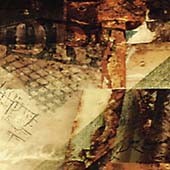
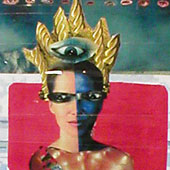
"One of the attractions of working with the book form is its ability to encompass many media. Painters, printmakers, photographers, sculptors and others find the form of the book invites their own interpretation. The narrative and/or sequential characteristics of a book also allow artists to express their ideas in new ways, using their own established vision and creating a kind of dialog between the artists usual techniques and the form of the book. The intimacy of the book form, too, can bring a new level of interaction between the artists work and audience.
The artists in this show are all accomplished in at least one medium. This exhibit attempts to show the context in which each individual artist uses the book form to extend their vision."
: email
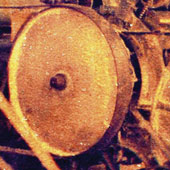
Laurinda Bedingfield is a full-time artist and life-long resident of Somerville. She combines photography, printmaking, drawing and other media to create her pieces. Although she uses a variety of media, each piece has a commonality inspired by everyday surroundings, objects of interest, memories and dreams. "As an artist I have unlimited freedom to invent and build for myself 'quiet worlds' amongst all the noise and chaos of the city". In her work, elements of the urban landscape that are commonly thought of as utilitarian and unattractive become objects of aesthetic interest. Her paintings, photographs and artist books reflect an alternate beauty. "Just as a walk in the autumn woods or by the ocean, the city’s landscape can be engaging and inspiring. It can be an adventure to walk a city street and really look at what we all take for granted as ordinary streetscapes." Laurinda is a graduate of MIT and Tufts University and has exhibited locally and nationally.
: email
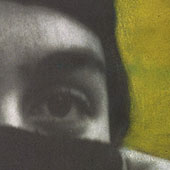
A recipient of national and local grants and awards, Laura Blacklow's work resonates with her social activism. In using altered photographs of the "real world" to explore the subjective realities of dreams, memories, and personal questions, and the existent realities of human relations, her work disrupts traditional notions about representation and documentation. The pieces serve as signposts in a psychological and political landscape that speak to our collective experience.
Attracted to making books for conceptual, aesthetic, and emotional reasons, Blacklow is interested in telling a story through the sequencing of imagery and a desire to hold that sequence in place. She wants to invite the viewer to "read" images and text, but also to interact by touching pages and leafing backwards or skipping forwards. Inspired by alluring books from childhood, she likes to create visually enticing bookworks for mature readers.
: email
Marcia Ciro uses photography to record and react to the world around her. Her images are often juxtaposed and exploited as metaphors to represent something other than what they are. This method easily lends itself to the structure, sequencing and flow inherent to books.
Ciro's work explores her personal environment, dealing with everyday life as well as the sometimes strange impressions and experiences that occur when one travels outside his/her normal routines. A recurring theme in her work concerns our relationship to the environment, both man-made and natural, and the stratagems we devise to separate ourselves from and control it.
: email
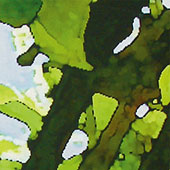
For Sharon McCartney, art begins with the long time habit of collecting natural objects on walks through the woods, fields and meadows near her home. Her subjects are ephemeral wildflowers, birds, insects, animals and plants from all seasons, found in the New England woods, and her work is about her relationship to the natural world as a source of sanctuary, wonder and personal rhythm. With a master’s degree in art history from Boston University, she draws from the influences of both Asian and European art with natural themes. Her work is included in many corporate, university and private collections. McCartney lives, works in Western Massachusetts, where she also teaches workshops in collage and book arts.
: email
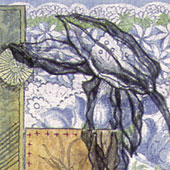
Karen Molloy's work expresses the basic sensation, the visual and textural substrate, of her life in the city. Each piece of 2D work or bookwork draws from the textures and rhythms of urban color and patterns, architectural motifs, and remnants of urban decay. At play in her work are the visual echoes and associations that occur when one encounters familiar patterns and shapes in different contexts.
She is greatly attracted to the physicality and intimacy of the book form. Working through her ideas in series form that creates a different visual experience from her 2D work is a deeply satisfying experiential challenge.
: email
Originally trained as a painter, Rita Valley now works in many forms, including installations and artist's books. Underlying concerns remain consistent in her work, including a preoccupation with recycling and notions self image. For the last few years, Valley has explored the corporate environment and its subtle subversion of our popular and aesthetic cultures.
Gathering material predominately from recycled fashion, political and "special interest" magazines, Valley investigates the many conflicting messages presented to us. Her inspiration is linked to a certain pragmatism and she has been happily appropriating words and images from many cultures, such as Tibetan painting.
Rita Valley thinks that provocative artwork happens in these uncomfortable interstices between the clashes of irreconcilable opposites, so prevalent in today's world. The work presented here is the ironically happy union of these opposing forces.
|